Working with naval architects beyond the project cycle
For G&O, cooperation with naval architects does not begin with a tender and end with delivery. While vessels are completed and enter service, the design houses behind them continue their work, updating specifications and preparing the next project. As regulations change and operational priorities shift, the technical dialogue does not start over. Over time, that continuity influences how systems are chosen and integrated.
Prices fluctuate, energy efficiency requirements tighten, and shipowners adjust operational priorities. In that environment, continuity matters. According to Michael Fønss Møller, Sales Manager at Atlas Incinerators, long-term cooperation is built through consistent technical engagement rather than isolated project interactions.
Part of that continuity lies in understanding that naval architects do not always represent the same stakeholder. In some projects, they work directly for shipowners, balancing lifecycle cost and operational reliability. In others, they act on behalf of shipyards, where constructability, schedule, and procurement alignment may carry more weight. Some are in-house design departments. Others operate as independent consultants.
“The priorities may shift depending on who they represent, even though the overall objective is the same: delivering systems that work and that last,” Michael Fønss Møller explains.
Understanding shifting roles and priorities
Understanding these shifting roles is essential. A solution that is compelling in a concept discussion with an owner may need to be framed differently when discussed with a yard in detailed design. Technical arguments remain important, but timing, documentation and responsiveness become equally important.
“We do not only meet them when there is a live project. There is an ongoing exchange about developments, cost levels and new solutions. That dialogue builds familiarity and makes the technical discussions more efficient when a project starts,” says Michael Fønss Møller.
Over time, this shared understanding forms the basis of long-term cooperation. It is what keeps a supplier relevant beyond a single vessel — and what ensures that when the next project begins, the dialogue continues rather than starts from zero.
OPEX as part of the design argument
While capital cost often dominates early discussions, operating expenditure is increasingly part of the conversation.
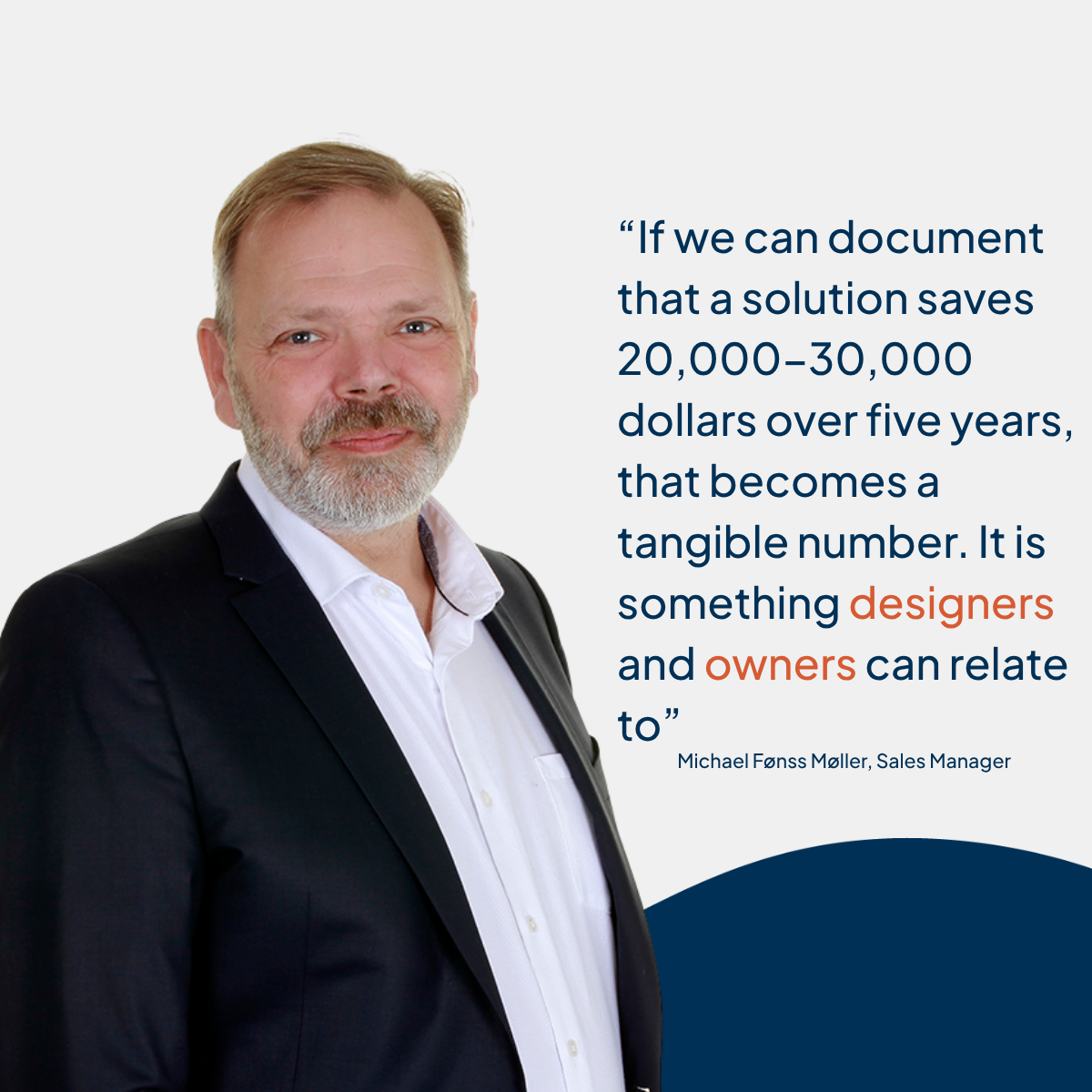
“If we can document that a solution saves 20,000–30,000 dollars over five years, that becomes a tangible number. It is something designers and owners can relate to,” says Michael Fønss Møller.
By bringing lifecycle considerations into the dialogue, G&O supports naval architects in making decisions that extend beyond layout and footprint. The result is not only compliance on day one, but a system that remains competitive over time.
Basic versus detailed design
The decision-making landscape also changes depending on the project phase. In basic design, dialogue is typically with the design house. Later, in detailed design and execution, the yard or EPC contractor may take over specification work.
“You must understand who you are talking to and at what stage. The arguments and the level of detail are not the same in basic design as they are when the yard is finalising drawings,” he notes. For naval architects, this means having a supplier that can follow the project across phases – from early layout discussions to final documentation and approval.
Service as a design discipline
For G&O, service does not begin after commissioning. It begins in the design office. “It is about being available with drawings, calculations and clarifications. Sometimes it is about answering a question quickly so the designer can move on,” says Michael Fønss Møller.
Responsiveness, technical input and long-term relationships are part of what keeps a supplier top of mind. “In the end, it is about trust. If they know we respond, and that we understand their constraints, they are more likely to involve us early next time.” For naval architects, that translates into reduced risk: fewer late changes, clearer specifications and systems that fit the vessel from the outset.
Michael Fønss Møller notes that in practice, responsiveness often matters more than positioning. “If a designer calls with a clarification late in the process, they need an answer quickly. If we can provide that without delay, it builds confidence.”
Visit our waste water management solution:
Want to discuss how waste management systems can be optimised already in the design phase?
Get in touch with our team to explore both incineration and wastewater treatment solutions.